At the CFBAA Safety Standdown in Orlando last week, CFBAA’s president tossed out a line that’s been rattling around in my head ever since. To paraphrase: we already have enough tools. What we need is a change in behavior.
I nodded along. Then I spent the next few days chewing on it.
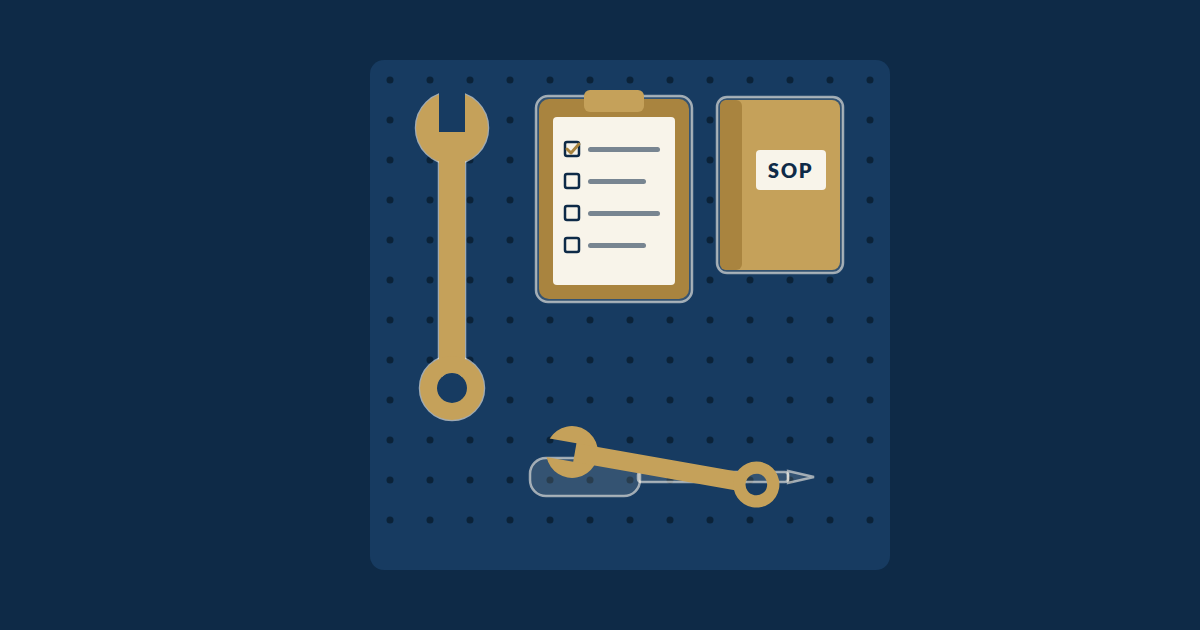
He’s right, by the way. Between the SMS manual, the hazard reporting system, the SOPs, the audit checklists, and the training records, most flight departments aren’t short on tools. If tools were the answer, we’d all be done by now and could go back to arguing about catering.
Whose behavior?
Here’s the thing. “We need a change in behavior” can be heard two ways, and only one of them gets us anywhere.
The easy reading is that crews need to use the tools better. Follow the SOP. Submit the report. Try harder.
I want to gently push back on that version. Not because it’s wrong that behavior matters, but because it quietly assumes the tools are fine and the people are the problem. In my experience, that’s usually backwards.
Every tool is written for imagined work
Sidney Dekker (2003) described two ways organizations think about procedures. In the first, safety comes from people following the procedure, and when something goes wrong, the fix is a new procedure or tighter enforcement. Sound familiar? In the second, procedures are resources that skilled people adapt to the messiness of real operations, and safety depends on knowing when and how to adapt.
Hale and Borys (2013) found the same split running through about 25 years of research on safety rules. One camp treats rules as fixed limits handed down from above. The other treats them as living tools that experts shape around the real world.
Now picture that on your ramp. The briefing card that gets read aloud word for word while everyone’s mind is on the weather. The SOP copied from a template written for an operation with three more airplanes and a full-time scheduler. The hazard report form nobody has touched since the last audit.
None of those are crew behavior problems. They’re tools that don’t fit the work.
When tools become a performance
Drew Rae and David Provan (2019) make a distinction I love: “safety work” versus “the safety of work.” Safety work is the stuff we do in the name of safety. The safety of work is whether the work is actually safe. Their argument is that a lot of safety work exists to show people we’re managing safety, and over time, evidence of the activity starts standing in for evidence of the outcome.
So whose behavior has to change?
Mine. And yours, if you lead a flight department.
Dekker’s practical answer isn’t more enforcement. It’s that organizations need to watch the gap between the procedure and the practice, and figure out why the gap is there.
That’s a leadership behavior. It sounds like asking “walk me through how you actually do this.” It looks like fixing the tool instead of retraining the person. When I visit a flight department, I start with the manual closed for exactly this reason. I want to hear how the work really happens, not how the binder says it happens.
I’m not saying rules are optional. I’m saying a workaround is information. When your crew works around a procedure, they’re telling you it doesn’t fit the work. Your job is to hear that and fix the procedure on the ground, so nobody has to work around it in the airplane.
But here’s the catch: you only hear about the workarounds if people feel safe telling you. Amy Edmondson’s (1999) research on work teams found that people admit mistakes and raise problems when they believe it won’t cost them, and that leaders who respond with coaching instead of punishment make that belief more likely. If the last person who mentioned a workaround got a lecture, you won’t hear about the next one. You’ll just keep reading a manual that describes an operation you don’t actually have.
And here’s the good news for small departments: you have a huge advantage. At an airline, the person who wrote the procedure might be three buildings and five layers of management away. In most flight departments, they’re probably sitting next to you. The gap between imagined work and real work should be short and easy to see. You just have to look.
Try this
Three questions to put to your team this month:
- Which of our tools does nobody actually use, and why?
- Where does the way we really do it differ from the way the manual says we do it?
- When was the last time we changed a procedure because someone told us it didn’t work?
If the honest answer to number three is “I can’t remember,” congratulations. You just found your behavior change.
Excellence was never about having the tools. It’s about having tools that fit the work, and people who trust you enough to tell you when they don’t.
A quick word on the evidence: these ideas come from well-regarded frameworks, reviews, and studies, mostly from outside business aviation, not from controlled studies of flight departments. But if you’ve spent any time on a ramp, I suspect they’ll sound familiar.
References
Dekker, S. (2003). Failure to adapt or adaptations that fail: Contrasting models on procedures and safety. Applied Ergonomics, 34(3), 233–238. https://doi.org/10.1016/S0003-6870(03)00031-0
Edmondson, A. C. (1999). Psychological safety and learning behavior in work teams. Administrative Science Quarterly, 44(2), 350–383. https://doi.org/10.2307/2666999
Hale, A., & Borys, D. (2013). Working to rule, or working safely? Part 1: A state of the art review. Safety Science, 55, 207–221. https://doi.org/10.1016/j.ssci.2012.05.011
Rae, A., & Provan, D. (2019). Safety work versus the safety of work. Safety Science, 111, 119–127. https://doi.org/10.1016/j.ssci.2018.07.001
Heading to NBAA-BACE? Talk this through in person at Bagels & BASC, Wednesday, October 21, 8:00–10:00 AM at Siegel’s Bagelmania, Las Vegas. RSVP here.