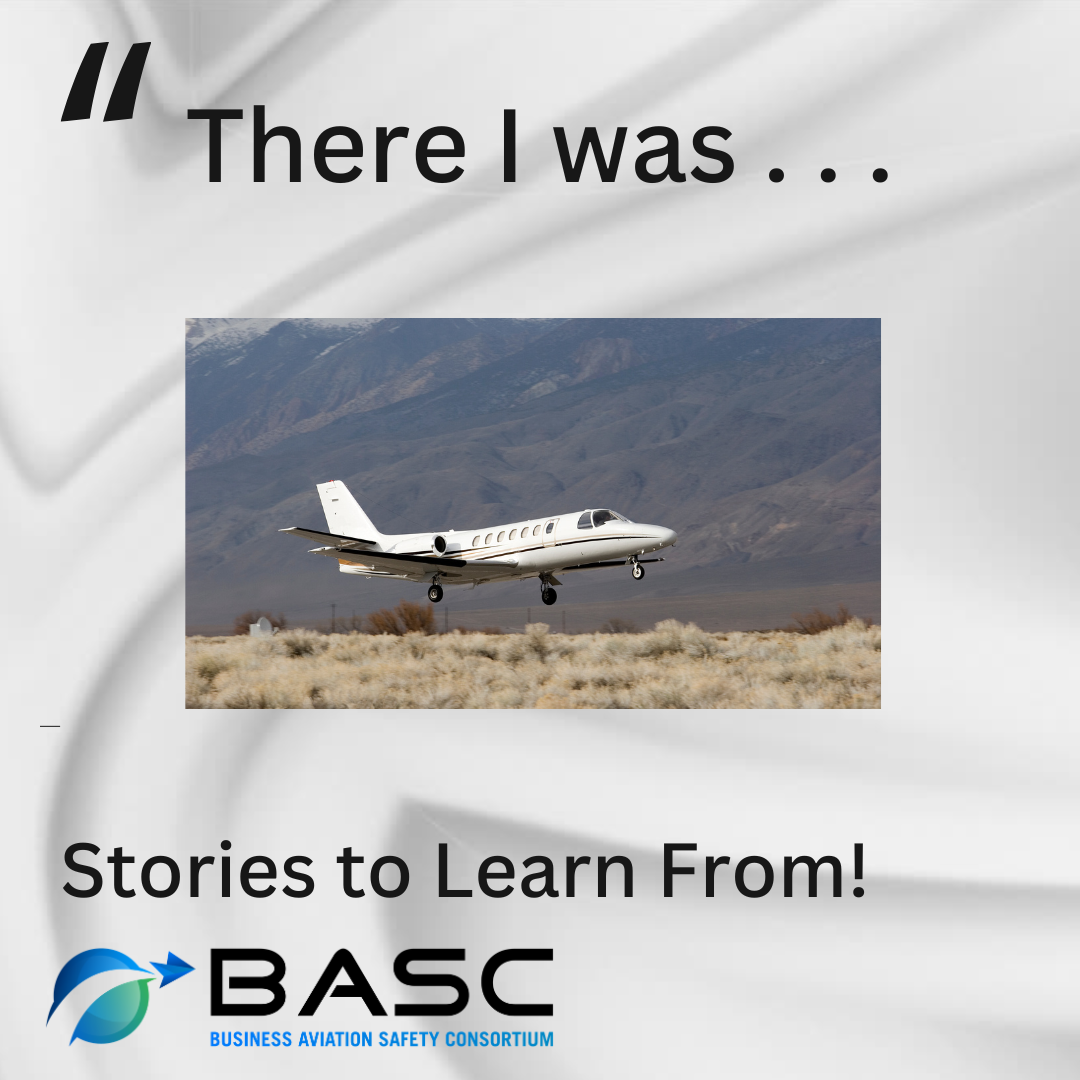
It was a Tuesday in late November, and I was wrapping up what should have been a routine repositioning leg in the Citation — empty cabin, principals already at the destination, and a full fuel load waiting on the next departure. The kind of leg where the pressure feels off because the passengers aren’t aboard yet. That sense of relief, as it turns out, was the first mistake.
The trip had been a long one. Two days, four legs, three different FBOs, and the kind of schedule that looks manageable on paper until you’re actually living it. Dispatch had the release ready, weather at the destination was VFR with a 3,000-foot ceiling, and the ATIS reported winds calm. I’d positioned into this airport a dozen times. I knew the approach, knew the ramp, knew exactly where to park. In business aviation, familiarity with the routes your clients fly regularly is an asset — until it isn’t.
About thirty miles out, Center handed me off to Approach and I checked in. They came back with a heading and an altitude, and I read back both. Or at least, I thought I did. What I actually read back was the mental picture I’d already built — the profile I’d flown the last dozen times into this field. Approach didn’t catch it. I didn’t catch it. And so we continued — me flying one clearance, them expecting another.
The next transmission snapped me back: “Verify altitude.”
I glanced at the altimeter. I was 1,000 feet below my assigned altitude, configured and descending on a profile that existed only in my head. No traffic conflict — but that was luck, not airmanship.
What Went Wrong?
The accident chain was short, quiet, and entirely self-inflicted:
Expectation bias. Flying the same routes repeatedly in business aviation creates strong mental grooves. My brain filled in the clearance I expected, not the one Approach actually issued.
Complacency from an “easy” leg. Repositioning flights without passengers can feel low-stakes. The cabin is empty, the schedule pressure is lighter, and it’s easy to mentally check out before the flight is finished.
A rote readback. In a high-tempo operation, readbacks can become a reflex rather than a verification. Mine was. A deliberate, conscious readback would have caught the mismatch before we ever left cruise.
Cumulative fatigue. Two days and four legs in doesn’t feel like a lot — until you realize your scan has slowed down and your processing has too.
What I Learned
Business aviation rewards professionalism in the quiet moments just as much as the difficult ones. The repositioning leg, the familiar airport, the routine arrival — these are exactly the moments where standards need to hold, because the feedback loop that keeps you sharp (passenger expectations, trip pressure, crew coordination) is temporarily absent.
Since that flight, I treat every readback as a conscious verification, not a courtesy. I cross-check the clearance against what’s set in the box before I move anything. And I’ve learned to treat a light leg with the same discipline as a full cabin.