There I Was… Cleared for the Approach
March 10, 2026



By Jason Starke, Ph.D
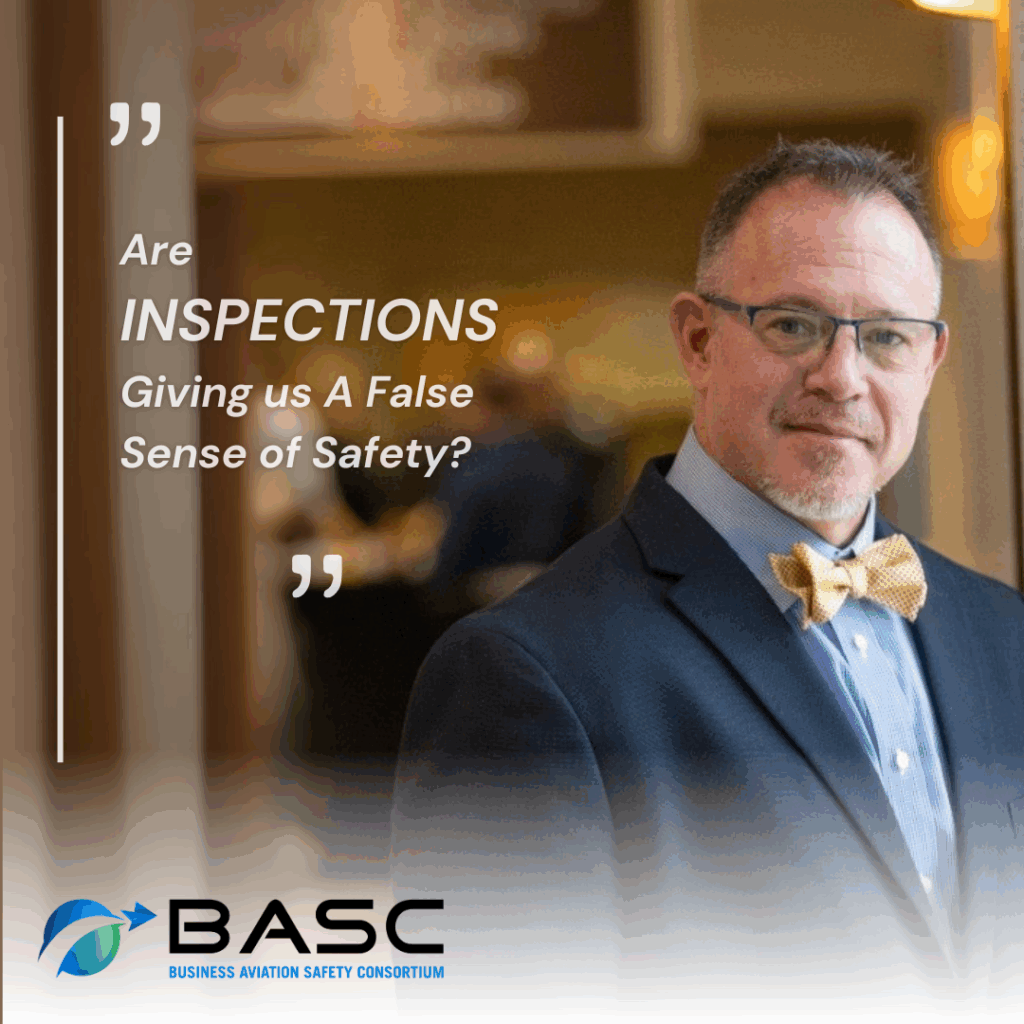
Inspections — whether for safety, compliance, or finance — are meant to be a safety net. They’re designed to confirm that systems are working, that rules are being followed, and that organizations are managing risk responsibly.
But in reality? They often show us the best-case version of operations — not the everyday truth.
Let’s face it: when we know an inspection is coming, we prepare. We tidy up, double-check procedures, and brief the team. That’s not inherently dishonest — it’s human nature. But it means inspections often capture a performance, not a pattern.
This behavior isn’t new. Researchers have long observed it across sectors — from finance to health and safety. The phenomenon is often described as “compliance theater,” where the appearance of compliance replaces deeper, systemic safety.
Cullinan and Sutton (2002) argued that scheduled audits often encourage short-term cleanups and superficial fixes rather than sustainable improvement.
There’s also a psychological factor at play. When people know they’re being observed, their behavior changes. This is known as the Hawthorne Effect (Mayo, 1933), a well-documented phenomenon in workplace studies. People tend to work more safely, more efficiently, or more attentively simply because they know someone is watching.
In practical terms, this means inspections might not be revealing normal behavior at all — but rather, a temporary spike in performance triggered by observation.
One tragic example of this disconnect between appearance and reality was the BP Deepwater Horizon oil spill in 2010.
In the months leading up to the explosion, the rig had passed numerous inspections. Equipment was signed off. Procedures were documented. From the outside, everything looked compliant.
And yet, the blowout preventer failed, critical warning signs were ignored, and decisions were made without fully understanding system risks. Eleven lives were lost, and millions of barrels of oil spilled into the Gulf of Mexico.
As the U.S. Chemical Safety Board (2016) concluded, the inspections focused on compliance checklists but missed the deeper systemic risks — how processes, culture, and decisions actually interacted under real pressure.
To be clear: inspections aren’t the problem. They’re a tool. And like any tool, their value depends on how we use them.
When designed well, inspections can:
– Reveal operational blind spots
– Reinforce accountability
– Build stakeholder confidence
– Highlight areas for improvement
– Create useful documentation for legal/regulatory purposes
But when they’re predictable or superficial, they risk becoming symbolic gestures — especially if the people being inspected are only on their best behavior because they know they’re being watched (Mayo, 1933).
This is the direction that the Business Aviation Safety Consortium (BASC) has embraced. At BASC, evaluation is one of three foundational pillars, alongside education and collaboration. Rather than relying on inspections as punitive or critical events, BASC believes in working with operators — not against them.
A BASC evaluation is not a beat down. It’s a structured, respectful opportunity to:
In fact, the very word “audit” comes from the Latin audire, meaning “to hear” or “to listen.” Before audits were written reports or scored checklists, they were conversations — about how things were going, what people were experiencing, and where improvements could be made.
That’s also why at BASC, we refer to our evaluators as Facilitators/Auditors (F/A). The title reflects our belief that listening is central to effective safety culture. Our F/As not only assess an organization’s performance — they engage, ask questions, listen deeply, and help facilitate forward momentum. We’re not just evaluating; we’re enabling better systems through collaboration.
What if inspections weren’t top-down, adversarial, or checklist-driven
What if they were collaborative? Focused on systems, not snapshots? Designed for learning, not just scoring?
This shift is already underway in some sectors. In healthcare, inspectors use real-time observation and “tracer” methodologies to understand how systems function under actual conditions.
As Hudson (2001) notes, trust-based inspections promote a more open culture and lead to deeper, longer-lasting improvements.
Rather than trying to catch people doing the wrong thing, collaborative inspections invite teams to examine how things go wrong — and how to make them go right more often.
The Hawthorne Effect, the illusion of compliance, and the Deepwater Horizon case all point to the same lesson: we cannot rely on observation alone to understand a system.
People behave differently when observed. Inspections capture a moment, not a movement — and they may miss slow-building risks that don’t show up when the spotlight is on.
The future of inspections isn’t about policing. It’s about partnering — to reveal what’s beneath the surface and build systems that perform well even when no one is watching.
Inspections aren’t going away — and they shouldn’t. But they need to evolve.
It’s time to move from:
Because the goal isn’t to pass an inspection. The goal is to build a system that works all the time — not just when the auditors show up.
Cullinan, C. P., & Sutton, S. G. (2002). Defrauding the public interest: A critical examination of reengineered audit processes. Critical Perspectives on Accounting, 13(3), 297–310. https://doi.org/10.1006/cpac.2001.0510
Gray, G. L., Hermanson, D. R., & Turner, L. A. (2011). Perceptions and misperceptions regarding unqualified auditors’ reports. Accounting Horizons, 25(4), 659–684. https://doi.org/10.2308/acch-50060
Hudson, P. (2001). Safety culture – The heart of risk management. Petroleum Review, 55(707), 30–32.
Leveson, N. (2011). Engineering a safer world: Systems thinking applied to safety. MIT Press.
Mayo, E. (1933). The human problems of an industrial civilization. Macmillan.
U.S. Chemical Safety Board. (2016). Final investigation report – Explosion and fire at the Macondo well (Report No. 2010-10-I-OS). https://www.csb.gov/macondo-blowout-and-explosion/